


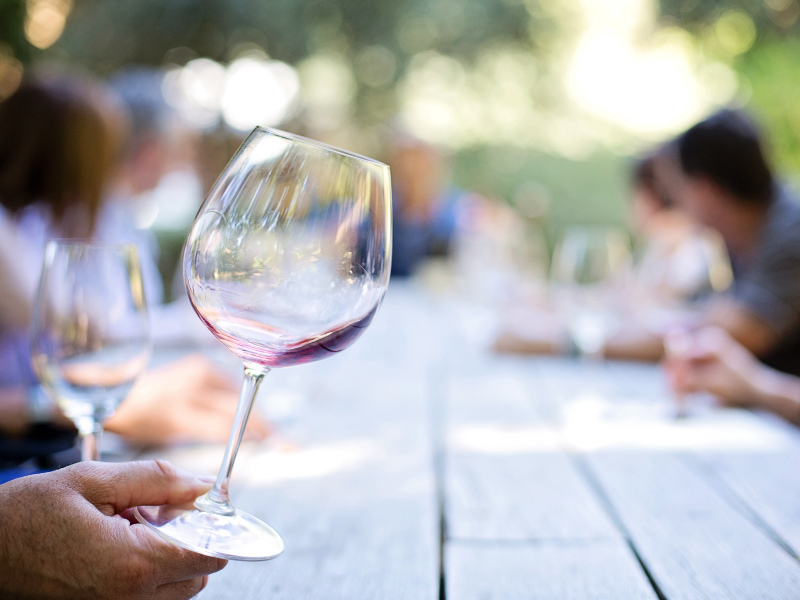
Last summer, a group of us gathered by the river in Fourcès as the afternoon began to cool. We had no particular agenda: a few bottles, something to eat, the low golden light that this part of Gascony does so well in July and August. It was a friend's birthday, reason enough. The river slid past. Somebody topped up the glasses. The conversation wandered where it wanted.
Some people couldn't make it. They have been asking ever since when we are doing it again. So have most of the people who were there. Now that the evenings are drawing out, I suspect the answer is: soon.
This is what the apéro does to you. You think it is a drink before dinner. Then you realise it is something else entirely.
What the Apéro Actually Is
The word is short for apéritif, from the Latin aperire, to open. It opens the appetite, yes, but it also opens the evening, opens the conversation, opens the door between neighbours who might otherwise pass each other for weeks without a proper exchange. Across the whole of our territory, from the Atlantic coast to the foothills of the Pyrenees and east to Provence, the apéro is taken seriously.
It is almost never rushed. It can last an hour; it can stretch considerably longer. It is not the same as a cocktail party, with its canapés and its social performance. It is looser than that, more domestic. A kitchen table with a view of the garden. A stone wall to lean against. Whoever turns up, turns up.
What You Drink
The southwest has an embarrassment of riches here, and locals have strong opinions. Floc de Gascogne is the most local choice in the Gers and Lot-et-Garonne: a blend of unfermented grape juice and young Armagnac, available in white or rosé, served cold. It is sweet without being cloying, and it tastes of the place.
Further west, Lillet and Pineau des Charentes take over. In Provence and around Aix, pastis is non-negotiable, that amber liquid that turns milky in water and smells of an entire region. And across the whole territory, especially in summer, a well-chilled rosé is always at home on an apéro table. Nobody needs to justify it.
The food that comes alongside is similarly unpretentious: a bowl of olives, a saucisson from the market, a slice of melon in July. Nobody is performing.
The Rules (Such As They Are)
There are very few, and they are mostly unspoken. You do not check your phone. You do not talk about work, or not in any way that sounds like you are still at it. You do not rush. If someone arrives and you do not have a glass for them, you find one.
I have lived here long enough to understand what this actually means. Southwest France and Provence, especially in the villages and bastides, still have a community life that urban Britain largely lost a generation ago. The apéro is one of the places where that life happens. Newcomers who grasp this tend to settle in quickly. Those who treat it as a prelude to something more important tend to find life here slightly harder than it needs to be.
How to Host One
Hosting an apéro is the simplest and most effective way to begin building a life in your village. Invite the neighbours. Put out whatever you have. If your French is halting, that is entirely fine: the apéro is patient with language learners, and people in this part of the world are generous about the effort.
You do not need a special occasion. A warm evening and a view of the river will do perfectly well.
Thinking about life in southwest France or Provence? Explore our properties, or speak to our team about finding the right home in the right village.