


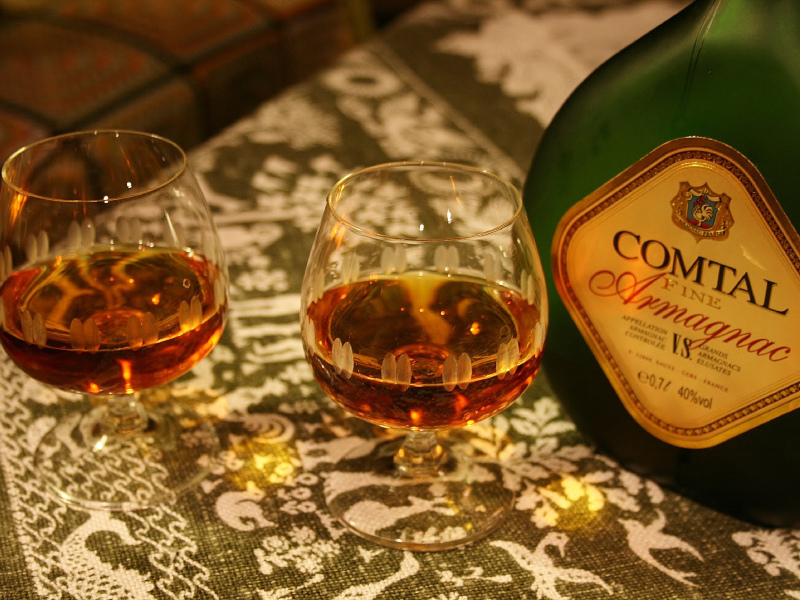
There is a French phrase – la part des anges – that belongs, properly speaking, to the world of barrel-aged wines and spirits. It refers to the small percentage of liquid that evaporates through the oak staves each year as a spirit matures: the portion that rises, unseen, into the cellar air. In the great distilling regions of southwest and western France, this quiet, unhurried process has been going on for centuries. It is, in its way, a rather good metaphor for the pace of life in both territories.
Armagnac and Cognac are France's two great brandies, and they share more than a base ingredient. Both are distilled from white wine grapes – Ugni Blanc predominates in each – and both are aged in French oak before bottling. They occupy adjacent corners of the southwest and Atlantic coast respectively, and between them they define a swathe of the French countryside that is among the most quietly rewarding in the country. Yet they are, in character, distinctly different – and so, in their own ways, are the regions that produce them.
How they're made
Cognac, the elder statesman in terms of international renown, is produced in the Charente and Charente-Maritime departments, centred on the town of the same name on the banks of the river Charente. The production process is meticulously controlled: the wine is distilled twice, in copper pot stills known as alambics charentais, producing a spirit of considerable elegance and consistency. It is then aged in oak – Limousin or Tronçaïs – and blended for uniformity. The big Cognac houses – Hennessy, Rémy Martin, Martell, Courvoisier – have made it one of the most recognisable spirits in the world, and the town of Cognac itself carries the comfortable confidence of a place that has been doing something very well for a very long time.
Armagnac operates on rather different principles. The oldest distilled spirit in France – documented as far back as 1411 – it is produced in three appellations in the Gers and surrounding departments: Bas-Armagnac in the west, Ténarèze in the centre, and Haut-Armagnac in the east. Where Cognac favours double distillation and carefully managed blending, Armagnac uses a single distillation in a continuous still – the alambic armagnacais – that preserves more of the raw character of the wine, more of the terroir. The result is a spirit with considerably more personality: earthier, more complex, sometimes more demanding, but capable of extraordinary depth.
Perhaps the most distinctive feature of traditional Armagnac production is the bouilleur de cru – the travelling distiller who loads his still onto a trailer and brings it to the farm rather than the other way round. In the Ténarèze and parts of Bas-Armagnac, this practice still survives, and the sight of the still set up in a farmyard in November, the air sharp with the scent of new spirit, is one that stays with you. Unlike Cognac, Armagnac can be – and often is – vintage-dated: a single year's harvest in a single barrel, which means that a bottle of 1962 Armagnac is genuinely from that year, not a blend designed to approximate it.
Two landscapes, two ways of life
Cognac country is the Charente: gently rolling, pastoral, crossed by the broad and placid river. The town itself is handsome, its older buildings stained dark by the Baudoinia compniacensis fungus that feeds on the evaporating spirit – the angels' share made visible. The countryside around it is predominantly agricultural, with vineyards alternating with sunflower and cereal fields, and the markets at Cognac, Jarnac and Saintes offer a glimpse of a food culture that leans towards the Atlantic – oysters from Marennes-Oléron, butter from the Charente, Pineau des Charentes (the local aperitif of grape juice and Cognac) poured generously before lunch.
Armagnac country in the Ténarèze is different in feel: the landscape is more varied, more undulating, the villages more scattered. The towns of Condom and Valence-sur-Baïse are the natural centres of this part of the appellation, with the Abbaye de Flaran – a beautifully preserved twelfth-century Cistercian abbey – sitting at the heart of a countryside that has changed relatively little in centuries. Auch, the Gascon capital, is an hour to the south, its cathedral and its statue of d'Artagnan (the Gers' most famous son, at least in fiction) presiding over a city that rewards a longer stay than most visitors give it.
The aperitif here is Floc de Gascogne – a blend of Armagnac and unfermented grape juice, somewhere between a vin doux naturel and something altogether its own – served cold, as a matter of course, before any meal worth the name. The autumn market culture, the unhurried rhythm of the working week, the particular quality of the afternoon light over the Gascon hills: these are things that are difficult to describe adequately to anyone who hasn't experienced them, and entirely self-evident to anyone who has.
Experiencing both regions
Both territories offer excellent opportunities for the curious visitor to go beyond the bottle. The Cognac houses offer tastings and cellar tours ranging from the polished and theatrical (Hennessy's river-crossing boat tour is genuinely impressive) to the intimate and artisanal, where a single producer will walk you through a cellar and pour from a barrel with no ceremony whatsoever. The Charente's waterways lend themselves to slow travel – by canoe, by barge, or simply by the riverside walk that connects Cognac to Jarnac along the north bank.
In the Ténarèze, the Route de l'Armagnac links the distilleries and domaines of the appellation, many of which welcome visitors by appointment. The autumn harvest and distillation period – roughly October to January – is the most atmospheric time to visit, though the summer markets and the festival calendar of the Gers offer their own pleasures throughout the year.
Properties in Armagnac Country
For those drawn to the Ténarèze, three properties from the current BVI portfolio illustrate the range of what this understated corner of the Gers has to offer.
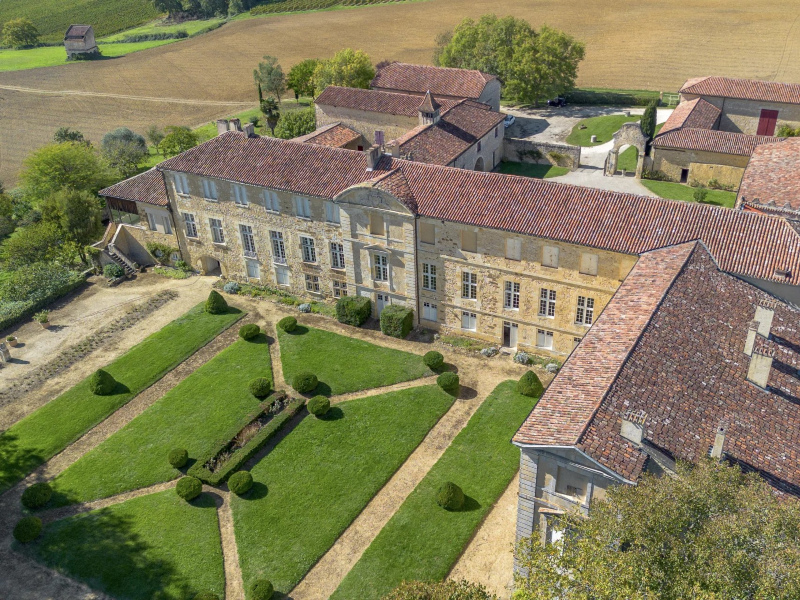 At the grandest end of the scale, Château Busca Maniban at Valence-sur-Baïse (€2,600,000 – BVI68709) is one of the true jewels of the Gers – a magnificent expression of French classical architecture set on a gentle rise with panoramic views across the Armagnac countryside. Built in 1649 and held by the same family since 1803, it is the kind of property that makes the history of this region tangible. The wine cellar and outbuildings offer serious potential for a hospitality or events venture in the heart of the appellation, but for many buyers, the prospect of becoming the next custodian of Busca Maniban will need no further justification.
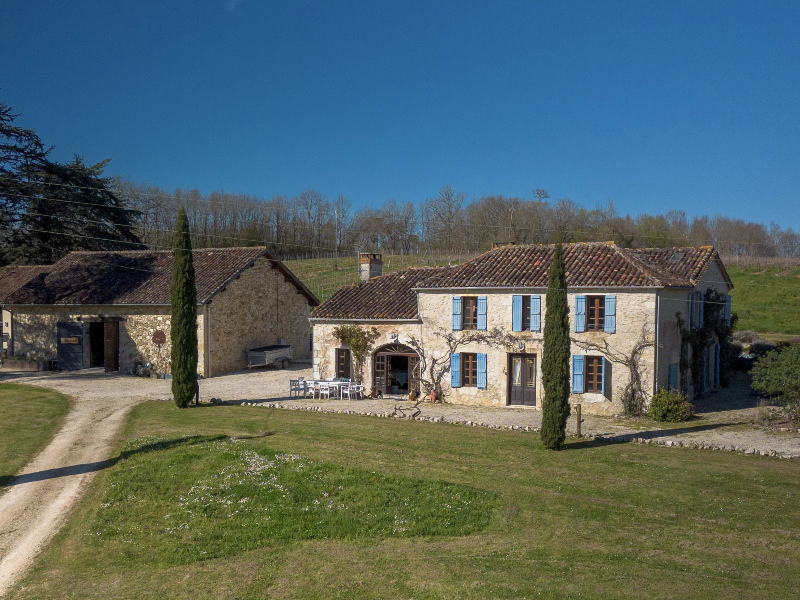 Close to the Plus Beaux Villages de France at Montréal-du-Gers, this beautifully restored country estate (€770,000 – BVI79540) offers a more intimate version of Gascon life: seven bedrooms, a separate guest cottage, a saltwater pool, and 4.4 hectares of grounds with equestrian facilities. The Pyrenees are visible on a clear day, and Agen's TGV station is within easy reach.
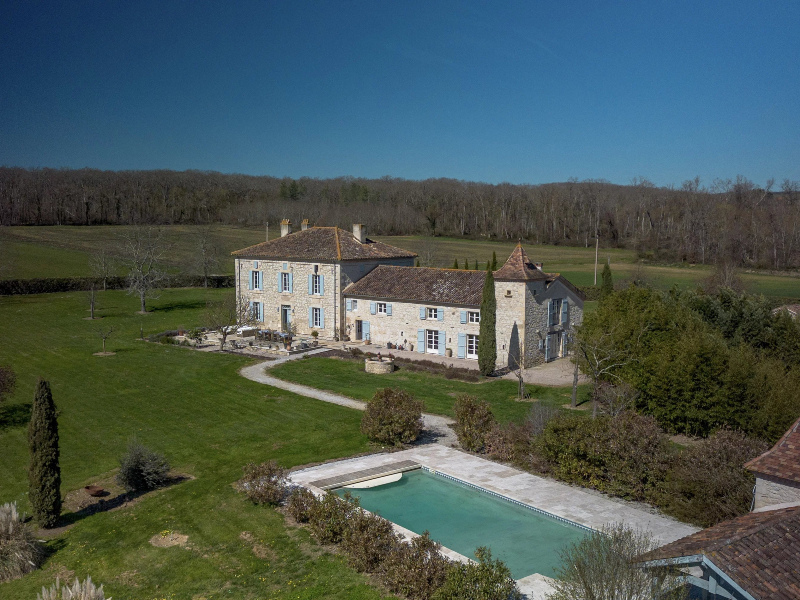 Just ten minutes from Lectoure – one of the Gers' most characterful hilltop towns – this exceptional maison de maître (€1,590,000 – BVI83043) has been fully renovated to provide 650m² of elegant living space, with a pigeonnier converted to a pool house and 1.4 hectares of flat, landscaped grounds. It is precisely the kind of property in which a well-stocked cave of Ténarèze vintages would find a very natural home.
Properties in Cognac Country
Three properties from the current BVI portfolio offer a sense of what Cognac country has to offer, at very different scales and price points – and with a remarkable shared thread of distilling history running through two of them.
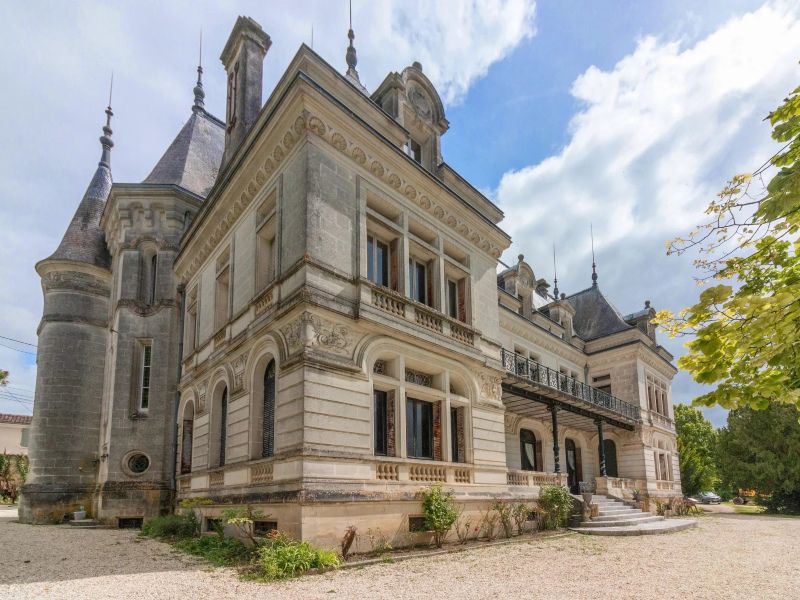 This extraordinary 19th-century château at Jarnac (€1,750,000 – BVI70783) was built for a wealthy Cognac merchant and sits high on the north bank of the river Charente, a five-minute walk from the town centre – and from the houses of Courvoisier, Hine, Delamain and Royer. With 798m² of living space over three floors, sweeping parkland running down to the river, and a listed historic status that brings tax advantages on restoration, it is a project for a buyer with vision – and patience.
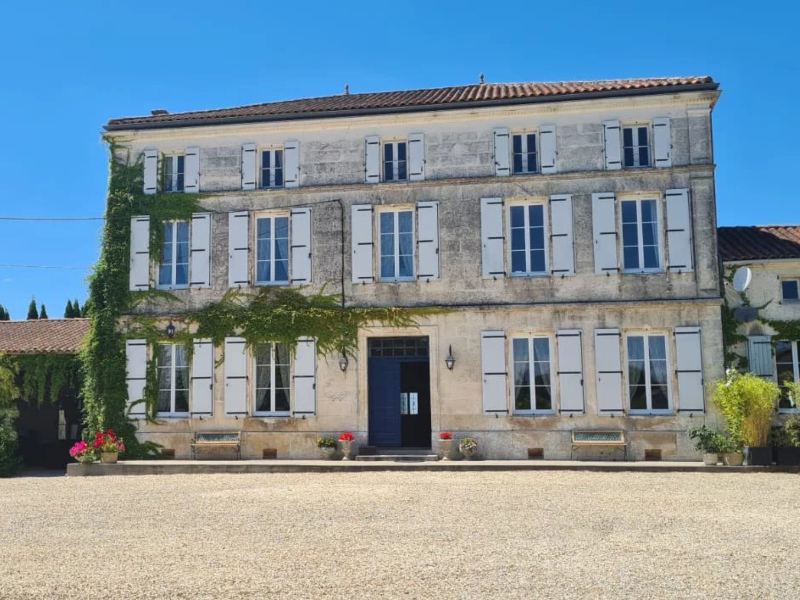 At €975,000, this beautifully restored manoir near Bessac (BVI84543) occupies a different chapter of the same story. Set in seven acres with views over vineyards, it was formerly a Cognac distillery, and the estate – which includes a gîte, a self-contained apartment, a luminescent-tiled pool and an established holiday rental income – has made excellent use of that inheritance.
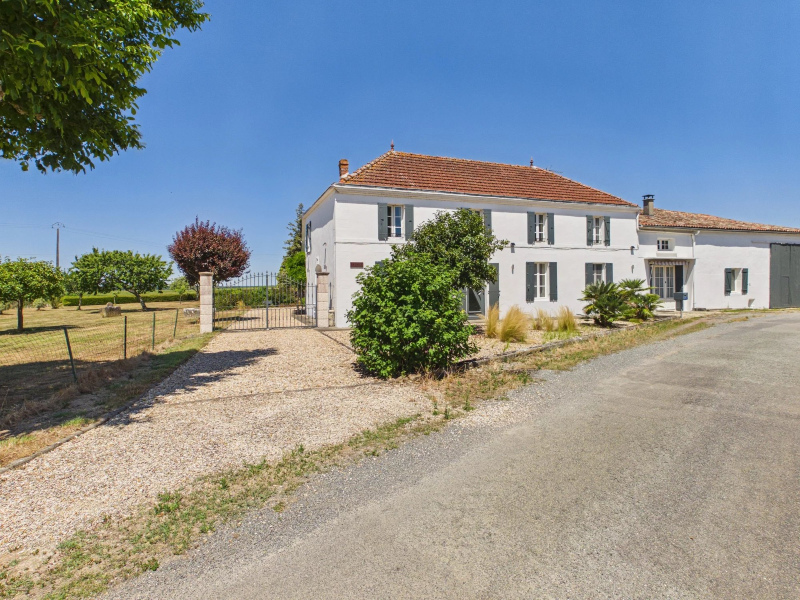 For those seeking the authentic character of the Cognac countryside at a more accessible price, this handsome Charentaise farmhouse near Jonzac (€399,900 – BVI84804) offers something quite special. Surrounded by vineyards and sunflower fields and set in a quiet hamlet, it too was once a distillery: the original vats remain in the carport, and beneath the gardens lies a 12th-century vaulted wine cellar of considerable charm. The main house provides 274m² of well-appointed accommodation with five bedrooms and solar panels, the former distillery wing offers gîte potential, and Jonzac's station – direct trains to Bordeaux – is just minutes away.
The practical picture
For buyers considering property in either region, the market for quality homes at genuine value remains compelling. The Charente continues to attract buyers who appreciate its accessibility – from the UK via La Rochelle, Poitiers and Limoges airports, and from Paris by TGV – and its gentle, unhurried quality of life. The best maisons de maître and manor houses are rarely on the open market for long.
The Ténarèze is somewhat less well known to international buyers, which is part of its appeal. It offers the full register of Gascon architecture – bastide towns, working farms, the occasional small château – at prices that still reflect a market in which value is genuinely available. The regional capital of Auch is within easy reach, Toulouse is less than ninety minutes away, and the Pyrénées are visible on a clear day.
Both regions reward the kind of buyer who is looking not merely for a house, but for a place to inhabit fully – where the rhythms of the agricultural year, the ritual of the weekly market, and the pleasures of a well-stocked cellar are not incidental to daily life, but central to it.
The angels, it seems, have been taking their share for good reason.